Thursday, August 4, 2016

Trace Gas Emissions on the Tundra


Greenhouse gas emissions, including the flux of CO2 and CH4 from terrestrial ecosystems, provide an important land-atmosphere feedback to climate. As such, the NGEE Arctic project has several tasks that target a mechanistic understanding of the processes that control the carbon cycle. This applies not only to our field and laboratory studies, but also to our modeling where it is critical to properly represent the timing, rate, and magnitude of CO2 and CH4 flux from plants, soils, and ecosystems.

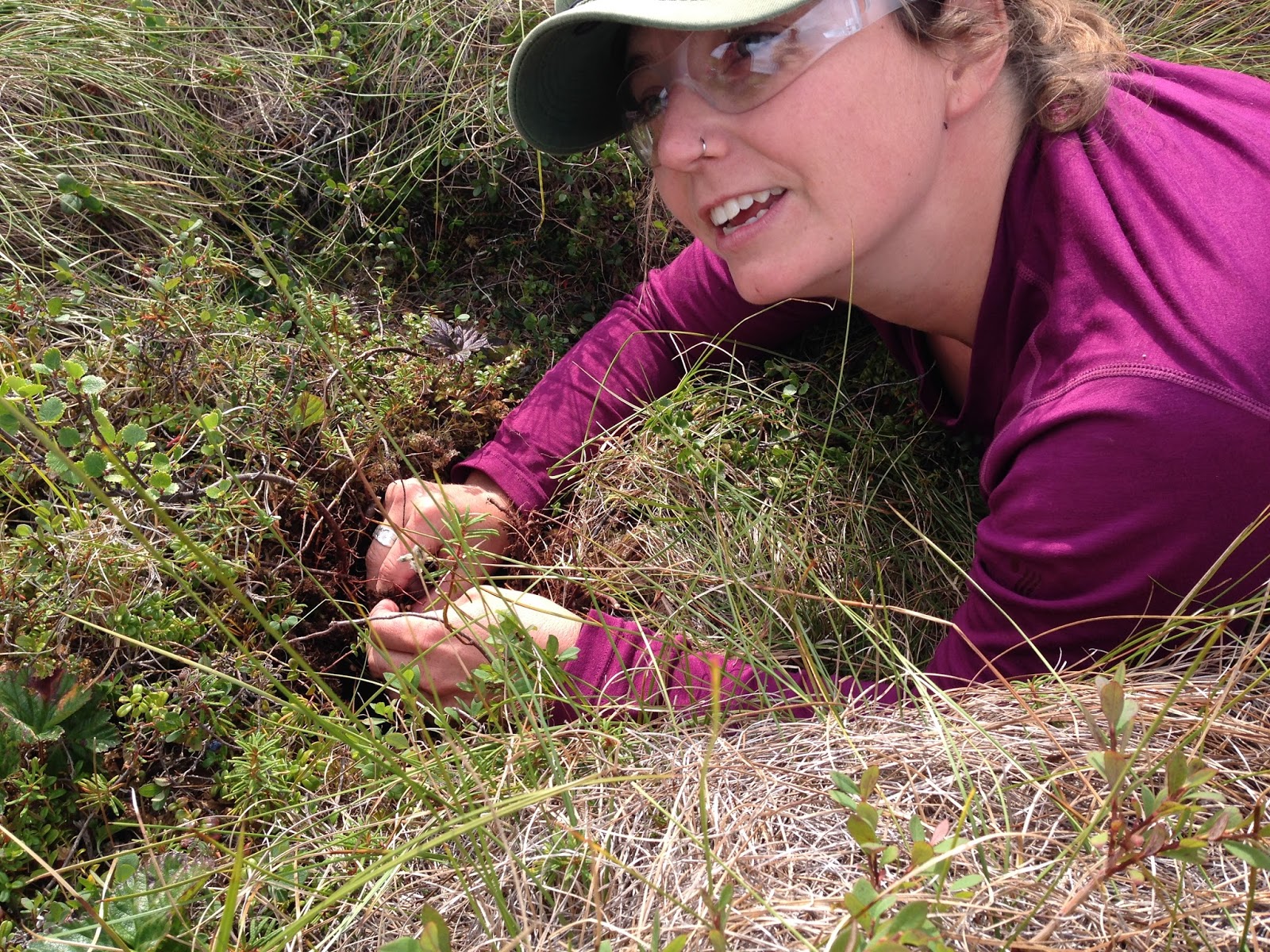
This week Ori (LBNL) and others are busy measuring trace gas flux at locations across the landscape at our field site near Council, AK. You may remember Ori from her work in Barrow where she has been helping with our measurements since 2014. Using similar techniques as those perfected at Barrow, Ori is working this week to deploy a network of chambers that will allow our team to determine how the flux of CO2 and CH4 varies in tussock tundra and in areas where permafrost thaw and thermokarst formation are underway. Ori has installed PVC bases into the soil at dozens of locations across the field site. She is using a portable gas analysis system from Los Gatos Research to measure flux rates by first placing a clear or opaque chamber on the PVC bases. An air-tight seal ensures that both the increase and decrease of CO2 and CH4 concentration can be measured, from which rates of ecosystem gas exchange can be estimated.


Field-scale measurements of CO2 and CH4 flux will be important for quantifying whether tundra ecosystems are a source or sink for carbon. More importantly these data, and the knowledge derived from them, will guide more mechanistic studies under controlled conditions in the laboratory and validate how those mechanisms are represented in models. The results that Ori and others gain this week will also help us prepare for more intensive measurements next year.


Monday, August 1, 2016

Digging Deeper


The NGEE Arctic project is interested in plant and soil processes. Not only does this include a focus on the biogeochemical mechanisms that lead to CO2 and CH4 emissions from tundra landscapes, but also on the structure and function of plant roots. Colleen (ORNL), who is one of our Phase 2 task leaders, understands the importance of roots and has made it a central theme for our research on the Seward Peninsula.

Today Colleen, Joanne, Verity, Eugenie, Holly, Mark, and Peter joined forces to collect soil cores and selectively excavate roots from several plants growing at our field site. Soil cores were taken using a battery-powered drill equipped with a specially-designed coring device. Using this technique Colleen was able to collect soil cores up to 35 cm in length in just a few minutes. Once cores were extracted from the barrel it was easy to see the different soil layers including green moss, organic-rich regions that contained most of the roots, and then mineral soil. These are placed in plastic bags, frozen, and shipped back to Colleen’s laboratory for analysis.


Verity, a post-doctoral research associate working on the project, also wanted to collect roots from plants in the field. This is a tedious process in which roots attached near the base of a specific plant had to be excavated and then traced out into the soil. In this way roots of various sizes and “root order” could be collected. Verity attacked this task with enthusiasm. It turned out that Peter was also particularly talented at tracing roots and helped Verity and Joanne collect a large number of roots. Although Peter has a background in field research, most of our colleagues know him for his work with Earth System Models. This week he traded high-performance super computers for helping us in the field; and apparently Peter enjoyed getting first-hand knowledge about how data on root structure and function were obtained for use in global climate models. We were glad to have him as part of the field team!


Thursday, July 28, 2016

Keeping track of tundra shrubs


Many scientists have reported on the “greening of the Arctic” and speculated that this might be due to increased productivity of existing shrubs, expansion of shrubs in places they already exist, and then the movement or migration of shrubs onto previously shrub-free tundra. A greening of the Arctic has important consequences to the biophysical feedbacks between the land surface and atmosphere.

One of the critical objectives in NGEE Arctic is in knowing more about what controls shrub distribution in tundra ecosystems. Our first step in tackling this challenge lies in characterizing field sites on the Seward Peninsula for shrub abundance and then working to understand how shrub dynamics vary by landscape position and as influenced by soil water content, active layer thickness, etc.

Today, Mark, Peter, and I began measuring shrub abundance along several 800 to 2200 meter transects established earlier in the year at our field site outside Nome. This involved identifying specific points along those transects and measuring the distance to the closest “tall” shrub in each of four quadrants. We focused on several Salix, Betula, and Alnus species. It was a somewhat tedious process of not only measuring the distance to the nearest shrub, but also using digital calipers to measure stem diameters for anywhere from one to several dozen stems per plant. The alders, in particular, and sometimes the larger Salix, were time-consuming to measure since each shrub might consist of up to 18 stems.


Regardless of the difficulty in making these measurements they are important data to collect and central to several of the major questions being addressed by NGEE Arctic. We will couple this information with data on plant traits, soil temperature, and soil moisture. Insights gained will help improve our description of vegetation dynamics, specifically shrubs, in computer models.


Tuesday, July 26, 2016

Hydrology and Geochemistry at Teller Field Site


Members of the NGEE Arctic team from Los Alamos National Laboratory have played a major role in areas of hydrology and geochemistry. Their expertise, both in the field and laboratory, is complemented by others at UAF and ORNL. As a result we have gotten off to a quick start with research at our Teller field site beginning this winter with snow ablation and snowmelt measurements, and surface and pore water sampling earlier this spring.

This week Brent, Jeff, Carli, and Lauren are working at the Teller field site to collect additional surface and pore water samples. This site has an interesting pattern of surface and subsurface hydrology due, we believe, to the interaction between permafrost and bedrock. We are investigating these patterns by analyzing water samples for geochemistry. A range of anions and cations present in the samples can be analyzed quite precisely, along with measurements of the isotopic composition of water and its constituents.

Today LANL researchers transported and installed three Teledyne Isco portable water samplers at the field site. Transporting the samplers to the field was the first challenge. Although the loads were bulky, thankfully they were light. Once they were strapped to a backpack frame they could be carried to the field and deployed along a stream that runs the length of the watershed. Isco samplers, powered by 12-volt marine batteries, automatically collect water samples over time. Collection amounts and timing of sampling can be programmed via a keypad and controller. Scientists will revisit the samplers throughout the summer, taking water samples back to their home institutions for analysis.


Monday, July 25, 2016

Team Members Begin to Arrive in Nome…


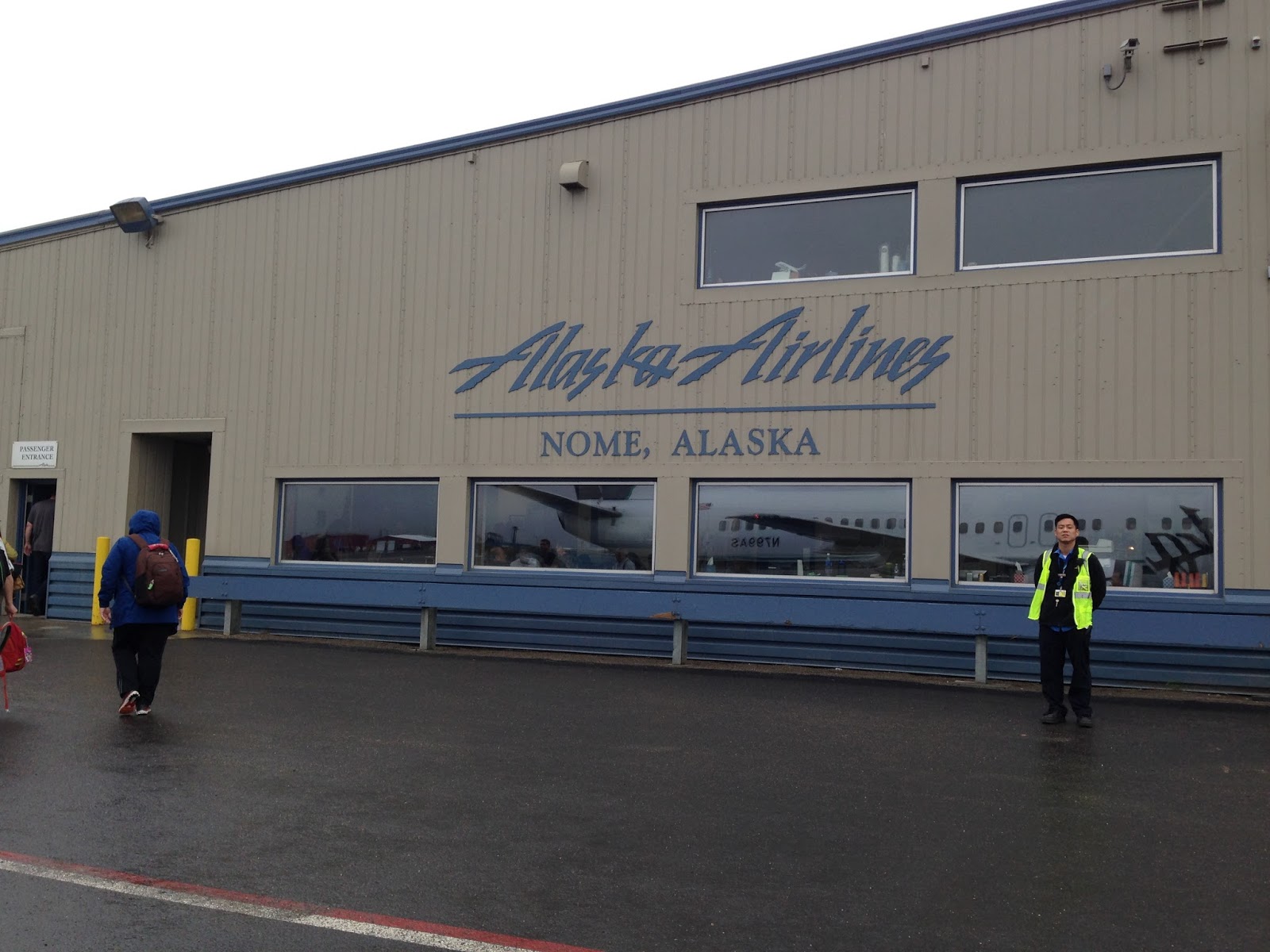
A lot of people are committed to the success of the NGEE Arctic project. And thankfully, many of them have traveled to Alaska. Some come to conduct research in the field, while others collect samples for analysis back in laboratories at their home institution. Still others come to get a better sense of how multi-scale models should be developed, parameterized, and evaluated using knowledge generated by their colleagues. So, whenever we have large field campaigns, like we are having now, it is especially enjoyable to see members of the NGEE Arctic project from all over the country begin to arrive.

Brent, Jeff, and Carli arrived from Los Alamos National Laboratory. Brent and Jeff have been associated with the project since our beginning and contribute in areas of hydrology and geochemistry. Carli is a post-doctoral research associate and is new to the project; she will assist with installation of equipment and initial collection of surface- and pore-water samples. Lauren, a post-baccalaureate student, will join us in a few days.


Alistair and Shawn from Brookhaven National Laboratory have also arrived. Both have extensive experience working at our field site in Barrow and will spend the next week in Nome conducting leaf gas-exchange and spectral signature measurements on a variety of tundra plants. Mark is completing his post-doctoral research at the University of Alaska Fairbanks and will soon be moving to the University of Illinois, Champaign-Urbana. He has undertaken some exciting analyses of landscape features on the Barrow Peninsula and estimated their contribution to greenhouse gas production. Mark is a creative scientist and we hope that he will continue to work with us once he gets settled into his new position.


Peter from Oak Ridge National Laboratory arrived last night, along with Eugenie from UAF. Both Peter and Eugenie are terrestrial ecosystem modelers who work at a range of scales, including the regional and global scale. They each also have conducted field research and know the value of collecting quality data for use in model development and parameterization. It is great to have them join us in the field as they benefit from, and contribute to, many stimulating discussions that happen in the field.


Several additional colleagues from ORNL also arrived last evening – Colleen, Joanne, and Verity. Colleen leads a Phase 2 task on plant traits. We are looking at shoot and root structure-function relationships and exploring whether this area of research can be used to inform models. The utility of plant traits in modeling is being championed by our sponsor at the DOE and we, along with our sister project NGEE Tropics, are keen to test ideas using field data from our respective field studies. Colleen and Joanne will be busy keeping us organized and on task this week. Amy (UAF) and Holly (ORNL, not pictured) have been in Nome for a week completing community composition assessments. We are fortunate to have Amy on the project as she brings a wealth of knowledge on arctic and boreal vegetation. Finally, Verity just finished her PhD dissertation at the University of Florida last Friday. She will join Colleen at ORNL as a post-doctoral research associate in another month or two. Congratulations Verity on receiving her PhD and welcome to the project!


Others will be joining us in the next few days. I’ll be sure to mention them in the coming week, along with the scientific and technical expertise they bring to the NGEE Arctic project.


Facilities in Nome…


Members of the NGEE Arctic team, or at least those who conduct field research in Alaska, are finding themselves increasingly comfortable living and working in the vicinity of Nome. While it is not a large town – 3,500 people – it nonetheless has resources that make our stay comfortable, efficient, and safe. These come in the form of grocery stores, hardware stores, hotels and B&B’s, restaurants, a regional hospital, a community recreation center, and the UAF Northwest Campus.


Business owners and local citizens are friendly and go out of their way to answer our many questions. Just this morning in response to asking about the different kinds of fish that occupy area streams and rivers I was given a “Fishing Guide”. The guide provides a river-by-river description of fish found in the region and, more specifically, along the Teller, Kougarok, and Council roads; Chinook, pink (humpies), chum, Sockeye, and Coho salmon; Arctic grayling, Dolly Varden, and Northern Pike. Now if we only had the time and, more importantly, the energy to fish or join a pickup game of basketball at the recreation center after long days in the field! Such is the life of a field scientist.


Friday, July 22, 2016

Flight into Nome via Kotzebue


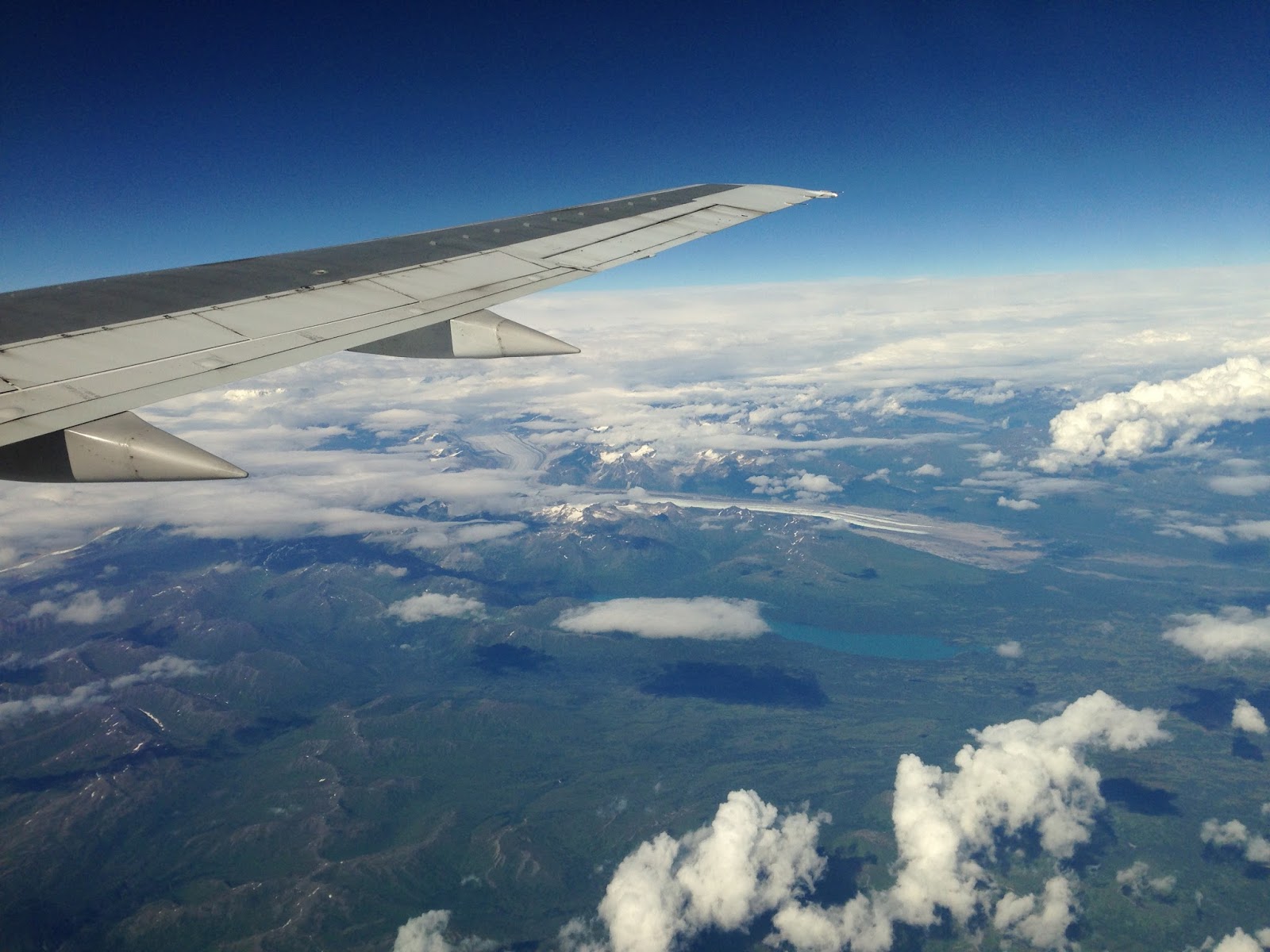
Yesterday was a busy day with flights from Knoxville to Chicago to Anchorage, and then to the Seward Peninsula in western Alaska. Normally I stop in Anchorage for a night to stock up on supplies, but given that the NGEE Arctic team is well equipped I flew straight through to Nome. I had forgotten that flights from Anchorage to Nome include a short stop in Kotzebue (http://www.cityofkotzebue.com/), which is several hundred miles north of Nome. Kotzebue has a population of over 3,000 people and serves as a regional supply hub for 10 satellite villages in the Northwest Arctic Borough and one in the North Slope Borough. We visited Kotzebue in 2012 and enjoyed the area, especially our visit to the Northwest Arctic Heritage Center operated by the National Park Service (https://www.nps.gov/noat/learn/news/nwahc.htm).

The flight from Kotzebue to Nome was short, less than an hour. Flying into Nome provided an opportunity to see some of the surrounding tundra and, in fact, the city itself. The weather in Nome has been cloudy with a few rain showers, but should be sunny and clear by the first of next week.


Although Amy (UAF) and Holly (ORNL) have been in Nome working for three or four days, most members of our team begin arriving tonight. We will welcome several dozen NGEE Arctic students, staff, and faculty in the coming week so there will be a lot of activities on which to report. Later today as I travel around town I’ll be sure to take a few pictures and include those in a post this weekend.

- Stan Wullschleger